
By Phurpa Lama
Crossing Borders Climate Ambassador, National Coordinator and Educator in Nepal
On the morning of August 26, 2026, a catastrophic event shattered the quiet high-altitude landscape of Nepal’s central Himalayas. High up in the Langtang region, at around 5,200 metres above sea level, a large section of glacier and underlying bedrock collapsed near Langtang Lirung, triggering an avalanche of ice, rock and debris into the valley below. The resulting debris flow swept through the Lhende Khola and into the Bhotekoshi and Trishuli river systems, devastating communities, infrastructure and livelihoods along the Nepal-Tibet border and downstream areas. The flow was estimated to have travelled at around 50 metres per second, or approximately 180 kilometres per hour.1 This blog highlights the human and economic cost of this disaster in Nepal, the profound climate injustice endured by Nepal’s mountain communities, and the urgent need for global action.
Human and Economic Cost of Disaster for Nepal
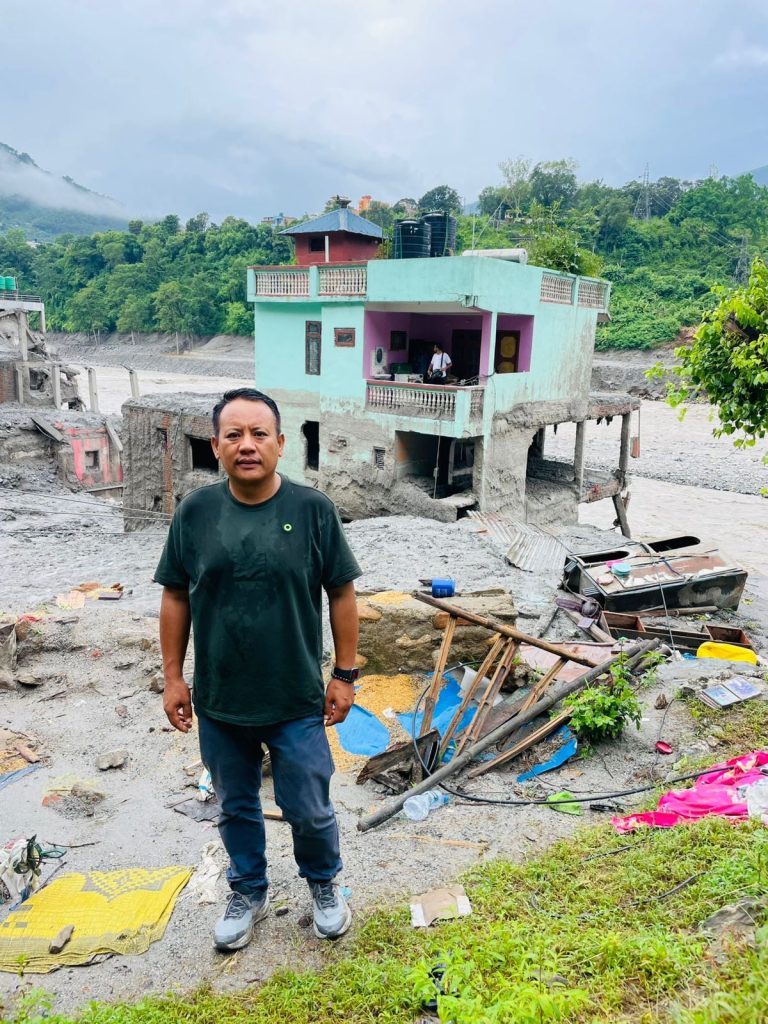
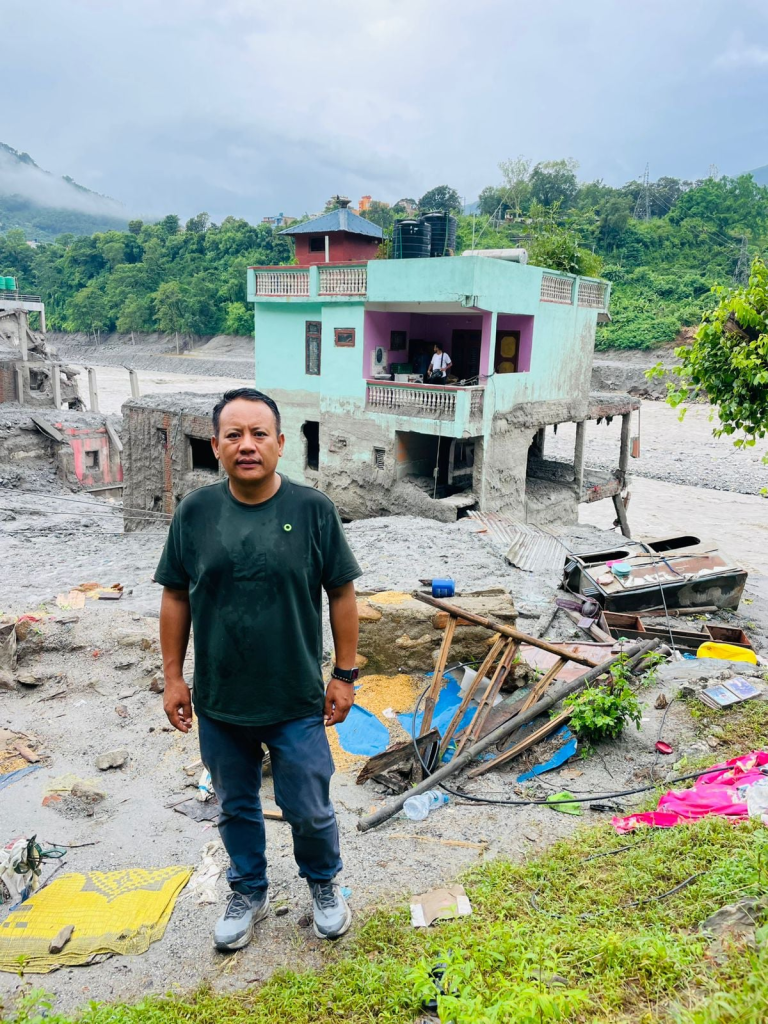
The human tragedy left in the wake of this sudden flood is vast and deeply painful. The latest update as of September 15, 2026 confirms that 1,399 people have lost their lives, while 5,130 individuals remain missing.2 Search and rescue teams continue to labor under highly dangerous conditions, racing against time to reach construction workers and engineers feared trapped in submerged, mud-choked underground tunnels at major hydroelectric power stations along the river. The flood directly affected approximately 7,570 houses and around 32,933 people, leaving thousands displaced from their homes and communities.3 Today, survivors are living in temporary emergency shelters and holding centres, facing shortages of essential supplies and services. For these vulnerable families, the sudden loss of their homes, loved ones, and livelihoods has left a deep wound that will take generations to heal.
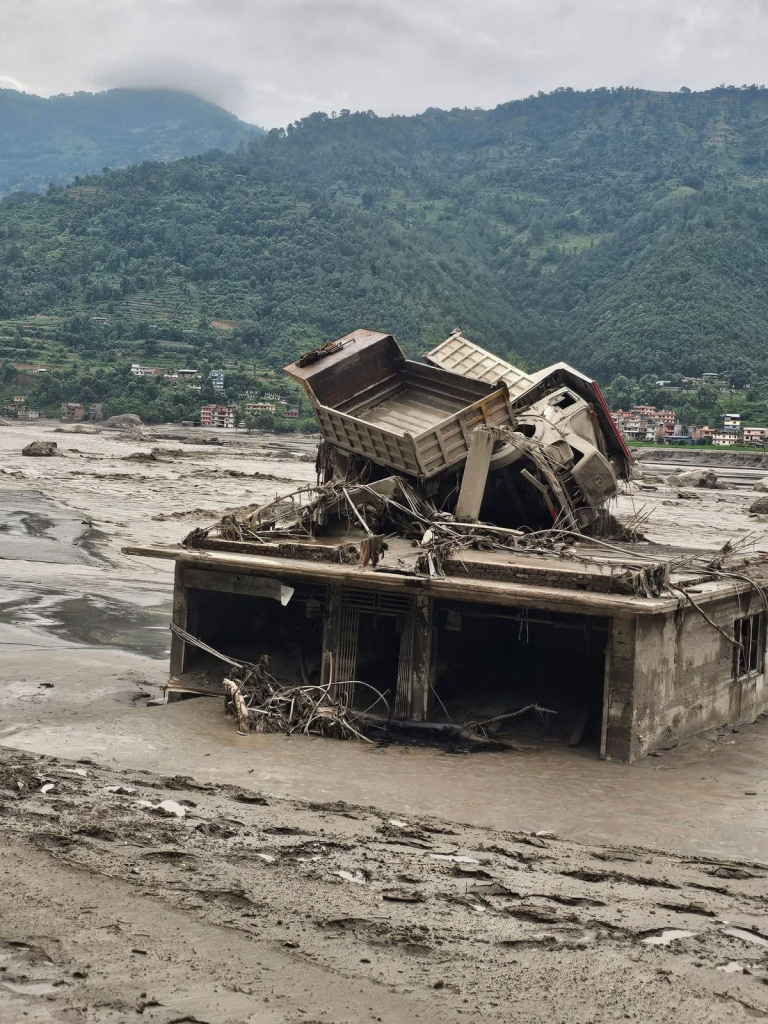
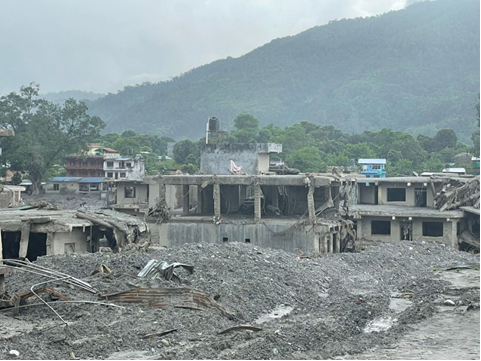
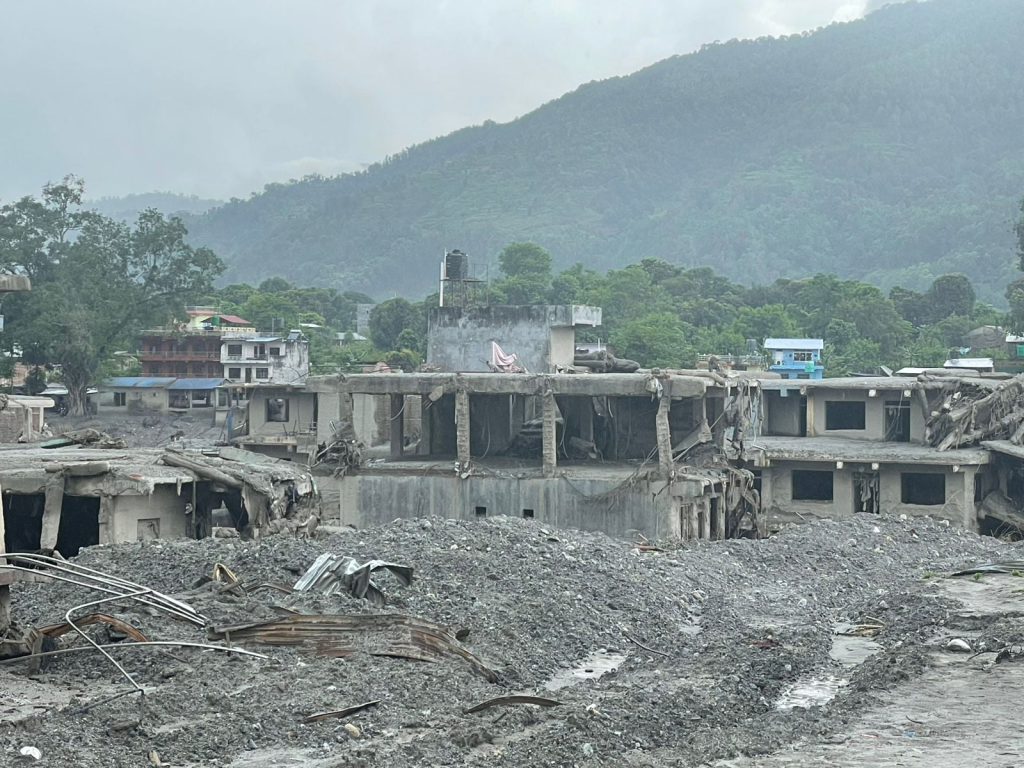
Beyond the horrific loss of life, the disaster delivered a devastating blow to Nepal’s national infrastructure, regional trade, and energy security. The strategic road corridor connecting Kathmandu to the Rasuwagadhi border crossing with Tibet/China, a vital economic lifeline for the country, suffered extensive destruction, with 55 kilometres of roads, 37 motorable bridges, and 68 suspension bridges damaged. The destruction of these critical transport links severely disrupted access to remote mountain communities and complicated the delivery of emergency assistance, medical services, food, and other essential supplies. Nepal’s energy sector also suffered a major shock, with 13 hydropower projects, one solar power plant, and two major transmission lines damaged, affecting approximately 783 megawatts of hydropower generation capacity. Major hydropower projects affected included Rasuwagadhi, Upper Trishuli 1, and Upper Trishuli 3A. Beyond transport and energy, approximately 1,806 hectares of agricultural land, 7,570 houses, and 48 government offices were affected. The scale of the destruction represents not only a humanitarian emergency but also a serious setback to Nepal’s economic development and regional connectivity.4
Climate Crisis and a Question of Justice
This tragic event should not be viewed simply as an unavoidable natural accident. It occurred in a Himalayan environment that is undergoing rapid and scientifically documented changes driven by climate change. The Himalayas are experiencing accelerating changes in their glaciers, snow, and permafrost. According to the International Centre for Integrated Mountain Development (ICIMOD), glacier ice loss across the Himalayas has accelerated significantly since 2000, with recent assessments showing that glaciers are losing ice at approximately twice the rate recorded before 2000. As temperatures rise, the degradation of high-altitude permafrost can make mountain slopes more vulnerable to instability. Permafrost helps stabilize mountain slopes, and its thawing can increase erosion and contribute to hazards such as rockfalls, landslides, and debris flows.5
There is also a profound climate injustice at the heart of the Rasuwa tragedy. Nepal contributes only about 0.1 percent of global greenhouse gas emissions, yet it is highly vulnerable to the impacts of climate change, including floods, landslides, glacier loss, and other hazards. The Himalayas are often described as the world’s “Third Pole” because they contain the largest concentration of ice outside the polar regions. The region is the source of ten major Asian river systems and provides water and ecosystem services to nearly two billion people across the mountains and downstream river basins. The rapid loss of glaciers, snow, and permafrost therefore has consequences far beyond the mountains themselves, affecting water security, ecosystems, infrastructure, and livelihoods across South Asia. ICIMOD estimates that under global warming of 1.5-2°C, glaciers in the Himalayas could lose approximately 30 to 50 percent of their volume by 2100 compared to 2015.6
Mountain communities in Nepal are therefore standing on the frontlines of a global climate crisis to which they have contributed very little. They are experiencing the consequences of a changing climate while protecting ecosystems and water resources that are essential to millions of people far beyond Nepal’s borders.
A Call for Global Action
The tragedy in Rasuwa must serve as an urgent wake-up call to the international community. Developing nations like Nepal cannot be expected to rebuild from escalating climate-related disasters alone, nor should they be forced to take on unsustainable debt to repair destruction intensified by a warming climate.
To prevent future loss of life and support affected communities, the international community must act immediately through three essential steps. First, world leaders and international climate funds must provide immediate, non-repayable grant financing to Nepal to rebuild climate-resilient homes, restore destroyed roads and infrastructure, and support displaced families without adding to the country’s debt burden. Second, the international community must help vulnerable mountain nations access advanced technologies, including real-time satellite monitoring, glacier and permafrost sensors, and high-altitude early warning systems capable of detecting instability in fragile mountain environments before it develops into catastrophic flooding and landslides. Finally, wealthy and high-emitting nations must rapidly and deeply reduce greenhouse gas emissions to limit global warming to 1.5°C above pre-industrial levels, in line with the goal of the Paris Agreement.7 The United Nations explains that limiting warming to 1.5°C significantly reduces the risks of extreme heat, drought, heavy precipitation, flooding, and other climate impacts.8
The collapsing peaks and devastated communities of Nepal are a warning of what is at stake. The world must move beyond expressions of sympathy and toward real, decisive action by providing climate finance, technology, disaster preparedness, and meaningful emissions reductions to support the people living on the frontlines of the climate crisis.
Bibliografi:
1 https://www.reuters.com/graphics/NEPAL-FLOODS/MAP/byvrdywwlve/
2 https://theannapurnaexpress.com/story/67106/
4 https://mofa.gov.np/content/1878/daily-update-6-september-2026/
5 https://www.icimod.org/mountain/permafrost/
6 https://hkh.icimod.org/hi-wise/ice/
8 https://www.un.org/en/climatechange/science/climate-issues/degrees-matter
