
Soni Khanal
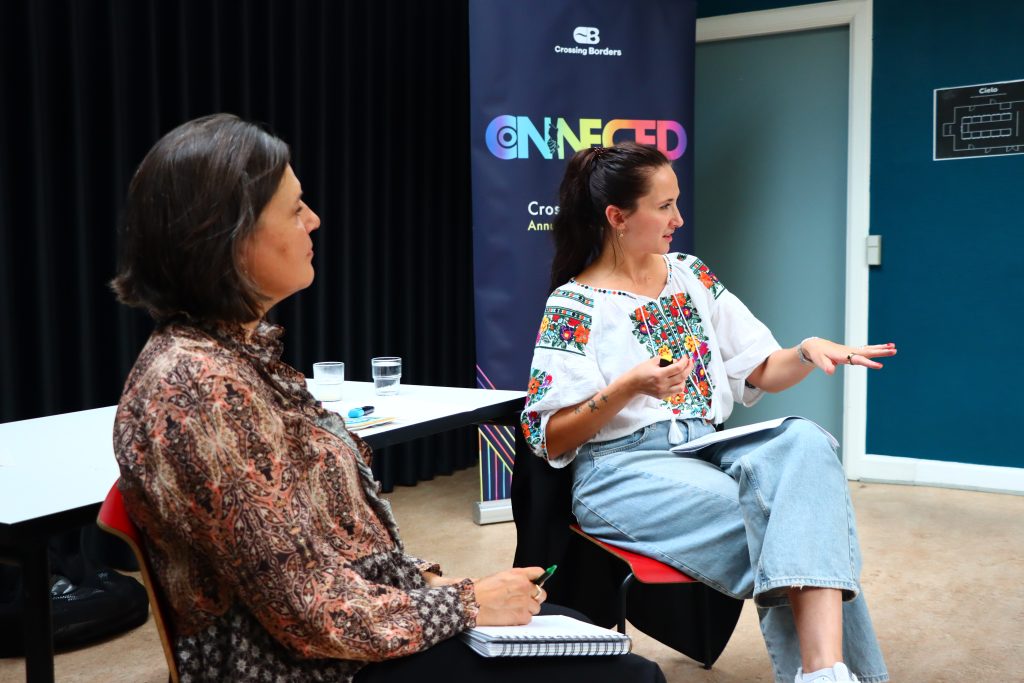
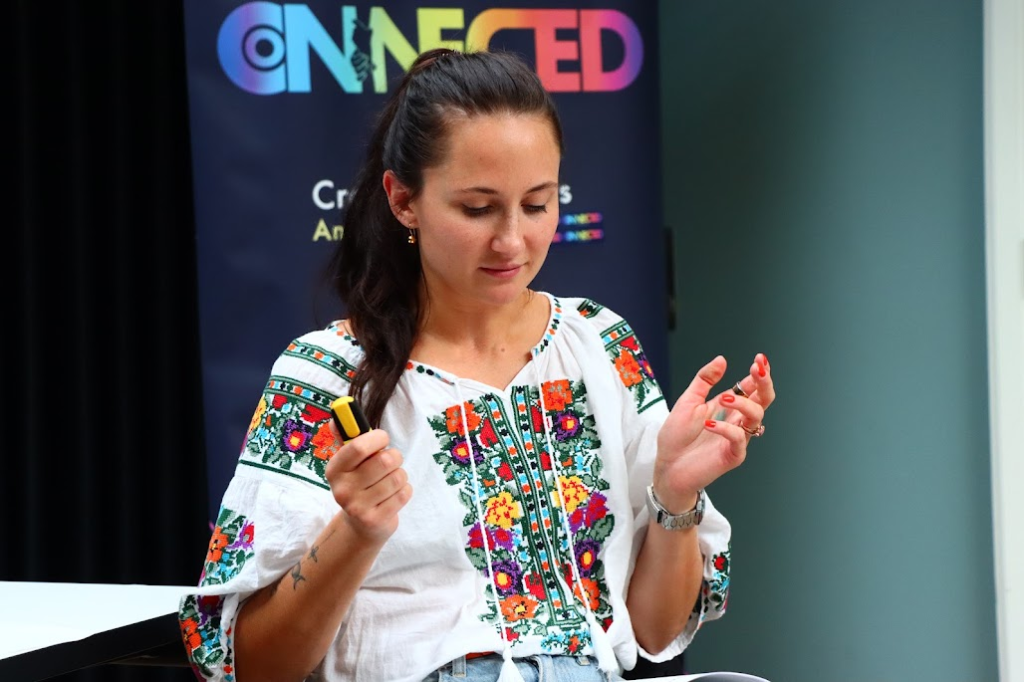
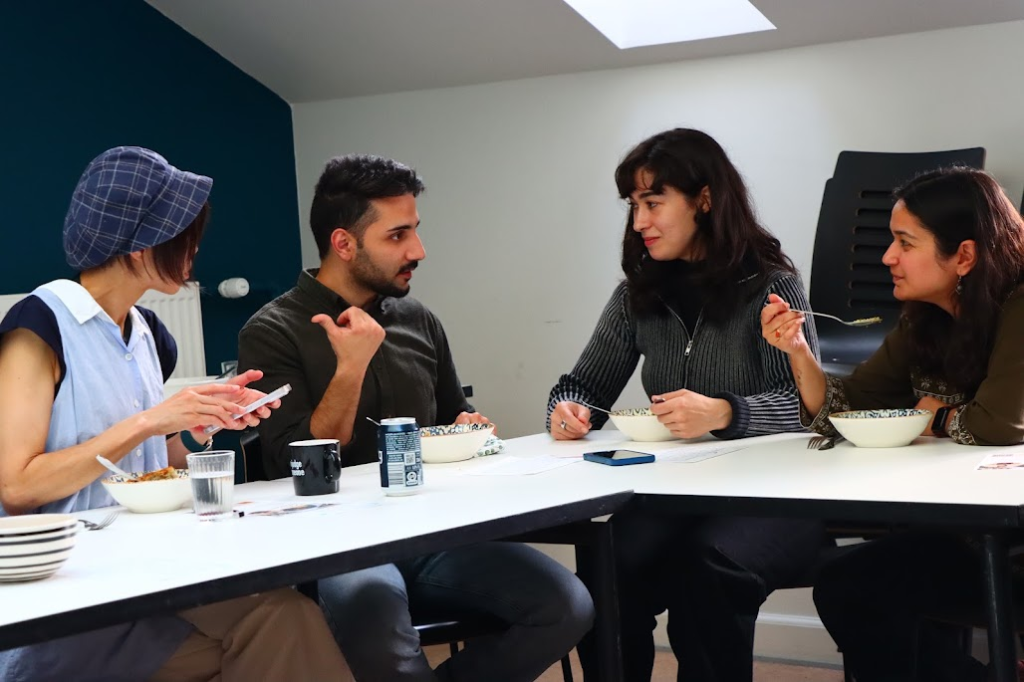
On 20 August, Crossing Borders hosted a Food for Thought session with Xenia Frost Fitisova, a Ukrainian psychiatric nurse, interpreter, translator, and speaker based in Denmark. The session explored three key topics: empathy, Ukrainian resilience, and democracy in times of uncertainty.
Looking beyond the surface
Xenia began by sharing her journey into psychiatry and how her curiosity about mental health developed into a deeper understanding of people and their experiences.
She encouraged us to look beyond what we see and not make quick assumptions about how people respond to difficult situations. Our upbringing, circumstances, past experiences, and social environment can all shape how we react to hardship.
This perspective is particularly important when thinking about people who have experienced war and displacement. What we see on the outside may not reflect what someone is experiencing internally.
One of the Ukrainian expressions Xenia shared was “Все добре” (Vse dobre), meaning “I am fine.”
The expression can sound reassuring, but behind those words there may be a very different reality. People can become used to carrying their struggles quietly, supporting others and continuing with everyday life without asking for help.
Ukrainian resilience
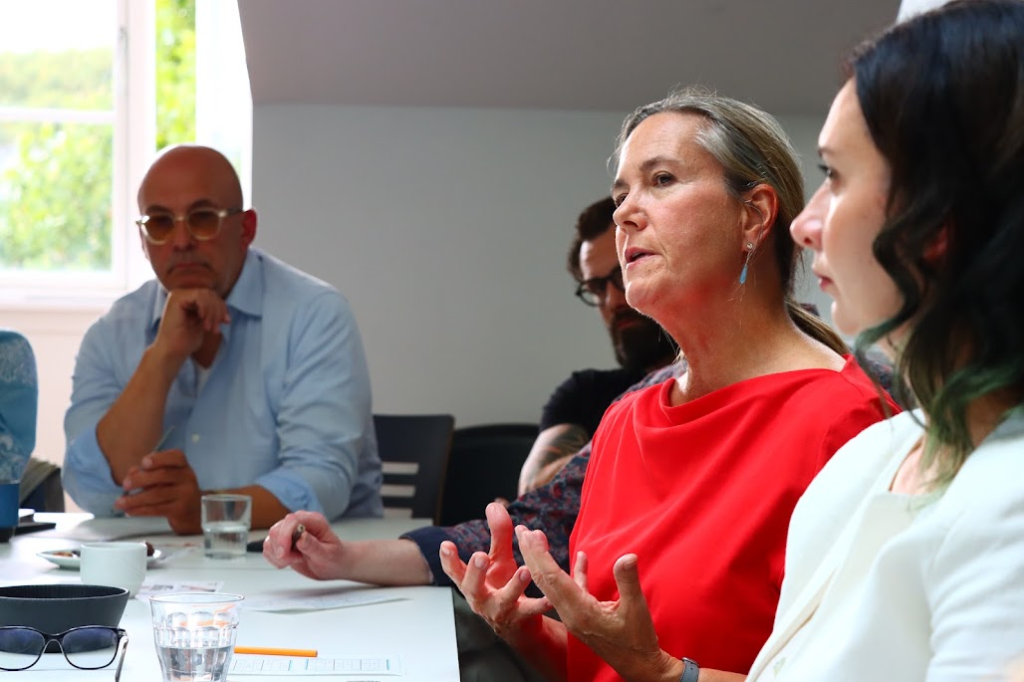
The conversation also highlighted the strength and resilience of Ukrainians living through war and displacement.
Fleeing war can provide physical safety, but it does not mean that the effects of war disappear. Trauma, PTSD, grief, uncertainty, and loss can remain. There is also the ongoing worry about family members, friends and loved ones who may still be in Ukraine.
Xenia reminded us that trauma can also travel across generations, meaning that the effects of difficult experiences can continue to influence families long after the original experience.
At the same time, resilience does not mean that people are unaffected by hardship. It can mean continuing to live, work, care for others and contribute to your community while carrying difficult experiences.
Another Ukrainian word Xenia introduced was “треба” (treba), the feeling that something has to be done.
This idea reflects a strong sense of responsibility. Even when people are experiencing their own grief and uncertainty, they may still feel the need to help and support others.
Democracy during times of uncertainty
The final part of the conversation focused on democracy, inspired by Xenia’s Ukrainian translation of Hal Koch’s What Is Democracy?
This raised an important question: What does democracy mean when basic needs are unmet and survival becomes the immediate priority?
Xenia explained that people can respond to these circumstances in different ways.
For many, survival naturally comes first. During war, people are focused on finding safety, supporting their families, and meeting basic needs.
But there is another side. Even during times of war and uncertainty, some people continue to take to the streets and protest when they see a lack of accountability. When people feel there is little left to lose, they may become more willing to speak out and demand change.
Recognizing complexity behind resilience
The Food for Thought session offered a different way of looking at the experiences of Ukrainians affected by war and displacement.
Through Xenia’s stories and reflections, we were encouraged to look beyond the surface, recognise the complexity behind resilience, and consider how the meaning of democracy can change when people are living through uncertainty.
The evening left us with a simple but powerful reminder: behind “I am fine” there may be a story we cannot see; behind resilience there may be pain; and even in times of crisis, people can continue to care, act, and demand a better future.
